
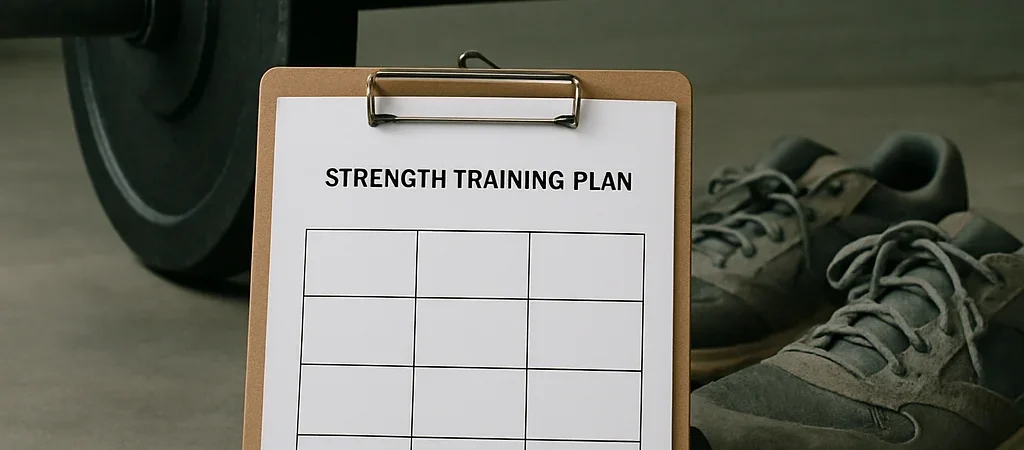
A training plan can look tidy on Sunday and fall apart by Tuesday, when work runs late and the squat rack is taken. That does not automatically mean you lack discipline; it may mean the plan has no room for real life. Useful coaching begins with a version of the session you can still carry out under ordinary conditions.
Choose the session’s essentials
Before adding exercises, decide what the session needs to accomplish. If the priority is practicing a squat, for example, keep that movement near the start and choose a manageable number of supporting exercises afterward. The plan should make the main work obvious, not bury it beneath a long menu.
Make room for a shorter day
Write down a shorter version before you need one: perhaps the main lift, one assistance exercise, and a brief cooldown. That gives you a clear adjustment when time is tight without turning every shortened workout into an improvised test of willpower. Keep the same movement focus so consistent practice can continue even when the session changes.
Review what actually happened
After training, note what you completed, what changed, and how the work felt. A coach can use those details to adjust the next session instead of guessing from a perfect-looking calendar. The most useful training plan is not the one that never changes; it is the one that still tells you what to do when Tuesday does.